I've tried to follow the tips for designing better skills lesson which I blogged about here in: "Let's bring back the TAPES." I built in reflection stages into the lesson plan, because I believe that whenever possible we should give our learners the tools they can use outside the class to better tackle similar texts (Techniques-oriented). I used authentic material and tried to make the tasks authentic too (Authentic). The tasks are Purposeful and fit into the overall lesson aims, so the learners should feel a sense of achievement. Finally, I tried to make the tasks Engaging by for example, getting the learners to read the text for the information chosen by them (see Task 2).
This lesson is suitable for any level from Intermediate above, although certain exercises might need adapting (see IDEAS)and more, or less, scaffolding depending on the students' level. It takes approximately 120 mins.
And please do comment below if you have any ideas how to improve/change the lesson plan. I'd also love to hear how it went down with your students.
Primary lesson aims:
- to introduce students to Shakespeare and his plays
- to show students how to read and understand a difficult text through reflecting on the process
- to practise inferring the meaning of difficult words from context
Lesson procedure
 Task 1 Discussion
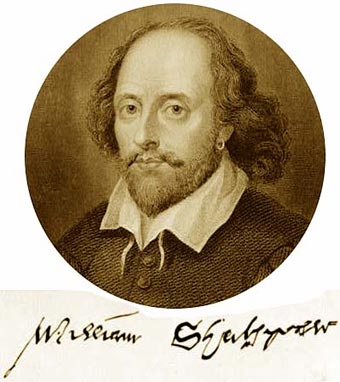
In pairs/threes discuss these questions:
- What do you know about Shakespeare?
- When and where was he born?
- What made him famous?
- Do you know titles of any of his plays?
- Have you ever seen Shakespeare on stage?
Task 2 Reading/Speaking
You are going to read parts of Shakespeare’s biography: prepare a list of facts that you would like to find out more about. Read the text quickly to find ONLY the information you’re interested in. Exchange the information with your partner.(IDEA: you can use any bio note you think will do the trick. I tend to cut it up into paragraphs and set them up around the room so that students have to move around and quickly look for the information. Set a strict time limit so they don't end up reading everything in detail. This activity is supposed to raise their curiosity and motivation as they read the text to find the information THEY are interested in.)
Task 3 Gist reading
Read the text below quickly.
Don’t stop on difficult words. You have 1
minute. Answer the question: Is Shakespeare and his works still popular
nowadays?(IDEA: you should be strict about the time limit. The text is very challenging, but the students should be able to answer the gist question. You can scaffold it by asking: Will you read the whole text? Will you stop on difficult words? Where are you likely to find the main idea?)
 Task 4 Reflection #1
Discuss these questions:
- Did you have time to read everything?
- Why did I ask you to read so quickly?
- Were you able to understand the main idea of the text?
- Is such reading similar to how you sometimes read in your mother tongue (e.g. when you don't have much time)?
Task 5 Gist reading #2 (paragraphs)
Read the statements below and decide if they adequately summarise each paragraph. Remember you don’t have to read every paragraph in detail. Look for its main message or summary. And don’t stop on difficult vocabulary.
- Paragraph 1: Most scientists think there is a Shakespeare boom.
- Paragraph 2: Shakespeare has always been and still is present in the literary canon.
- Paragraph 3: Shakespeare’s plays are still incredibly popular.
 Task 6: Reflection #2
Discuss these questions:
- How was the second reading different from the previous one?
- Was it more difficult or easier?
- Was it necessary to understand all the words?
- Where in the paragraph can you usually find the main idea?
Task 7: Reading for implicit meaning
Answer these questions by
choosing the correct option: a), b), c) or d). There is only ONE correct
answer. Before you start reading, underline the key words in the questions and
the answers.
1.
The comical impact of the soliloquy scene was: a) part of the film b)
was due to Branagh acting skills c)
was not intentional d) made everyone
in the audience laugh
2.
According to the text the mountain backdrop: a) looked artificial b)
greatly impressed the writer c) was
not part of the scenery d) looked very real
3.
After the soliloquy: a) loud laughter could be heard b) the audience remained silenced c) everyone was in awe d)
a few people laughed even though the scene was not meant to be funny
4.
Shakespeare’s recent popularity: a) is due to the re–introduction of his plays into school curricula
b) is not going to be long–lasting c) is derided by experts interviewed by
the author d) is only the author’s
biased opinion
5. Shakespeare: a)
is only widely read by academics b)
is thought to have been very tall c)
is for Harold Bloom only a minor writer d)
is criticised by some thinkers, while others see him as having similar
political views to their own (IDEA: if you're pressed for time, you might want to set this task as HW. Be prepared to guide your students. For example, point out to them how they should first eliminate the answers which are illogical. Using their schemata will also help (i.e. we know that the play is serious so the answer that seems more likely in 1 is c)
The text: "Shakespeare boom" by David Gates (Newsweek, 30th December 1996)
 At a press screening of Kenneth Branagh's
four–hour–long “Hamlet”, we ran into a colleague during the intermission. The
lights went up after Branagh had bellowed out the “How all occasions do inform
against me” soliloquy, with martial music blaring, in front of a bogus–looking mountain
backdrop. Under all the din, a few titters had been audible. “Well”, said our
colleague, “this ought to put a stop to the Shakespeare boom.” Maybe, maybe
not. But we were relieved that somebody else thought there was a Shakespeare
boom. So many of the scholars we’d interviewed had given us the old horselaugh.
The Bard is back? Was that our angle? (Par
1)
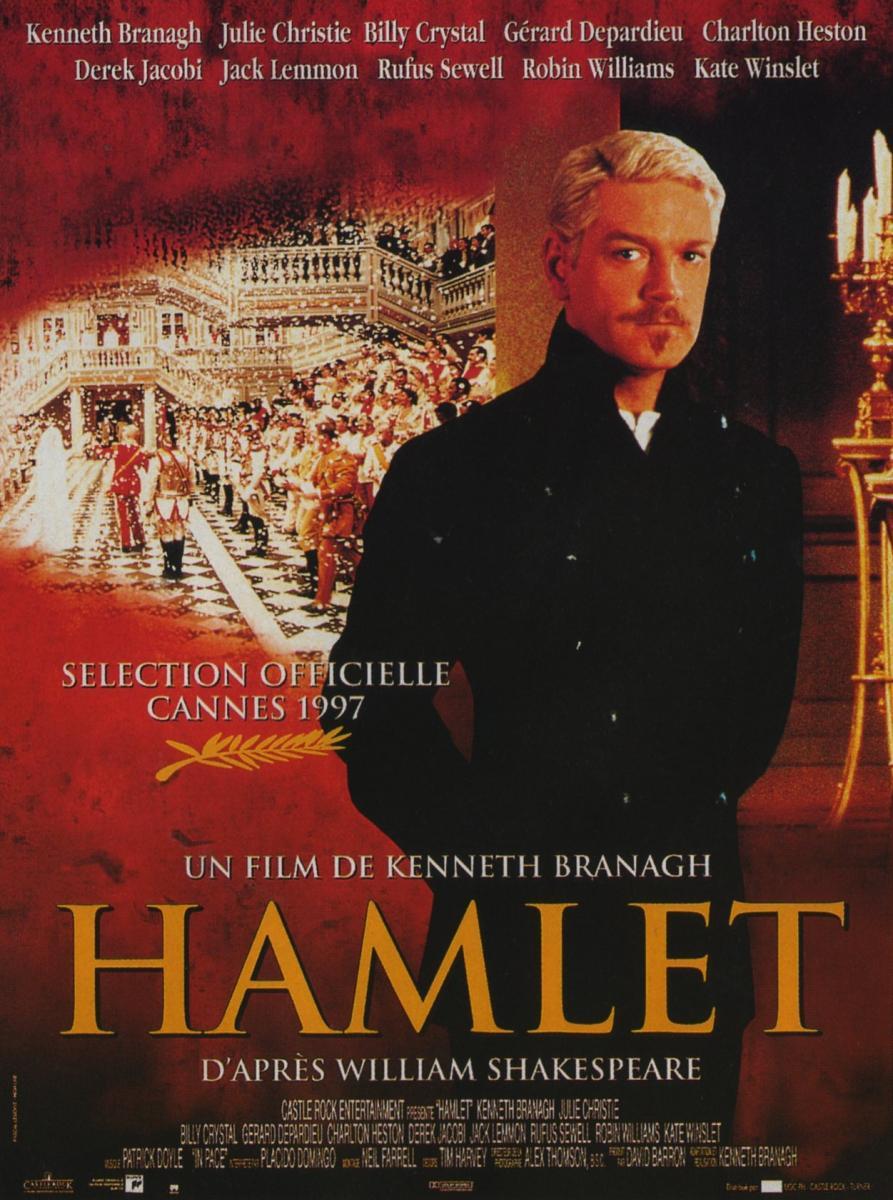 At a press screening of Kenneth Branagh's
four–hour–long “Hamlet”, we ran into a colleague during the intermission. The
lights went up after Branagh had bellowed out the “How all occasions do inform
against me” soliloquy, with martial music blaring, in front of a bogus–looking mountain
backdrop. Under all the din, a few titters had been audible. “Well”, said our
colleague, “this ought to put a stop to the Shakespeare boom.” Maybe, maybe
not. But we were relieved that somebody else thought there was a Shakespeare
boom. So many of the scholars we’d interviewed had given us the old horselaugh.
The Bard is back? Was that our angle? (Par
1)
The truth is, he
never went away. A couple of years ago the multiculturalists had supposedly
frog–marched him out of school curriculums. Yet in his native England, every
kid must now read two plays and take a national exam; no mass suicides
reported. In the United
States he's still studied in more than 90
percent of high schools. In universities, postcolonialists, feminists and
specialists in “queer studies” rope him in as either a fellow subversive or No.
1 whipping boy. While the writer whom critic Harold Bloom has pronounced “the
center of the canon” may never again bestride the narrow world like a colossus,
he gets around OK for a 400–year–old. (Par
2)
In New York
the week before Christmas you could see three new Shakespeare films–not
counting “Hamlet”, which opens Christmas Day. Former Royal Shakespeare Company
director Trevor Nunn offers a handsome, splendidly acted „Twelfth Night.” Al
Pacino's “Looking for Richard” is half “Richard III” and half a film about
filming „Richard III.” And Australian director Baz Luhrmann's post–MTV „Romeo
& Juliet” has car crashes, gun battles and Mercutio as a black drag queen.
In London
they're building, on the original site, a replica of the Globe Theatre, where
Shakespeare's own company performed–and he himself supposedly played Old
Hamlet's ghost. Already more than 300,000 people have attended performances in
the uncompleted structure. This month an organization of travel journalists
voted it the top tourist attraction in Europe.
(Par 3)
Task 8: Inferring meaning of difficult words from context
Look at paragraph 1. Find the
words: to run into and to bellow out.
Use the 4 step method to work out their meaning and match them to the definitions a) to
c):
a)
to meet by accident
b)
to shout in a
loud voice
4 step method: Working out meaning from
context:
1. Think about the wider
context of the text and the paragraph.
2. Look at some words that
come immediately AFTER and BEFORE the difficult word. Do they give you some
clues about the meaning?
3. Identify the part of speech and think of a
synonym that could be used to replace the difficult word.
 4. Finally, check the meaning
in a dictionary. Was your definition similar?
Now read the text more
carefully and find the words which mean:
1. fake,
not real (par 1) __________
2. a
loud confused and unpleasant noise which lasts for a long time (par 1) __________
3. to laugh nervously often
knowing you shouldn’t be laughing (par 1) __________
4. a
loud and usually derisive laugh (par 1) __________
5. a
position from which something is viewed (par 1) __________
6. to
force sb to move forward by holding their arms behind their back (par 2) ________
7. strange,
unusual (par 2) __________
8. to
persuade sb to do sth for you (par 2) __________
9. trying to destroy or
damage sth, especially an established political system (par 2) __________
10. sb
or sth that is blamed for problems caused by others (par 2) __________
11. to sit or stand with a leg
on either side of an animal or object (par 2) __________
Now in pairs cover the words or the definitions and
test each other on the vocabulary. Do you know how to use those words in a
sentence?Task 9 Controlled speaking: vocabulary activation
Retell the text to your partner. Use as many words from the text as possible. You get 1 point for each correctly used word. Who got more points?(IDEA: you could use some more activities to review and practise the words 1-11 using one of the activities I described in my post about recycling lexis. For alternative or additional ways of clarifying meaning of difficult vocabulary, if the context and definitions are not enough, you can check this post.)
Task 10: Reflection #3
- When reading a difficult text for the first time, should you focus on the main message or the details?
- How was each reading task different and how can you use this approach to read at home?
- Is it necessary to understand all the words to be able to understand a text?
- When you're reading in your mother language and you see a word you don't know, what do you do? Do you immediately look it up in a dictionary?
- How can context help you understand the meaning of unknown words?
Task 10 Speaking/Discussion
- Is Shakespeare also popular in your country? Why (not)?
- Which plays have you seen or read? Which would you like to see or read?
- Why do you think Shakespeare’s plays are still so popular after 400 years?
- Do you have an author in your country who is very popular?
- Do you like movies based on books or plays? Why (not)? Which have you seen?


